For many industrial plants in India, a "Closure Notice" from the Pollution Control Board or a dry borewell isn't just a worry—it is a business-stopping reality. As CPCB norms get stricter, traditional wastewater treatment is no longer enough. This is why understanding what is zero liquid discharge in water treatment is now a strategic necessity for your growth.
At Bisan Chemicals & Engineers, we transform wastewater from a liability into a resource with the help of zero liquid discharge. A zero liquid discharge system is a high-performance engineering process that recycles 100% of your effluent, leaving behind only solid waste. Based in Pune, we help industries across India achieve total water independence and 100% regulatory compliance through custom-built ZLD solutions.
How a Zero Liquid Discharge Plant Works
To truly grasp the power of a zero liquid discharge plant, you have to look at it as a multi-stage "purification journey." We take complex, contaminated effluent and systematically strip away impurities until only two things remain: crystal-clear distilled water and dry, solid crystals.
The Sequential Process of a ZLD System:
- Pre-treatment & Conditioning: This is the foundational step. Suspended solids, oils, grease, and large organic loads are removed using filtration, coagulation, and pH adjustment. This stage is vital because it protects the sensitive membranes and evaporators in the later stages from fouling or scaling.
- Membrane Concentration (Reverse Osmosis): Once the water is filtered, it enters high-efficiency Reverse Osmosis (RO) or Ultrafiltration (UF) units. This stage squeezes out the majority of the clean water (up to 70–80%), concentrating the remaining dissolved solids into a thick brine.
- Thermal Evaporation (MEE/MVR): The concentrated brine is then sent to the thermal section. Multi-Effect Evaporators (MEE) or Mechanical Vapor Recompression (MVR) technology is used to boil the brine, capture the steam, and condense it back into high-purity distilled water.
- Crystallization & Drying: The final slurry, now extremely thick, is processed through an Agitated Thin Film Dryer (ATFD) or a centrifuge. This removes the last traces of moisture, leaving behind dry solid salts that are easy to bag and dispose of at a TSDF (Treatment Storage Disposal Facility).
Zero Liquid Discharge Guidelines: Meeting Regulatory Standards
Navigating the legal landscape of industrial wastewater can be complex. In India, the guidelines for Zero Liquid Discharge systems are strictly governed to ensure that "highly polluting" industries do not contaminate groundwater or local river bodies.
Key CPCB & SPCB Mandates:
- The 17 Categories: The CPCB has identified 17 categories of highly polluting industries—including Distilleries, Tanneries, Pulp & Paper, and Fertilizers—that are often mandated to install ZLD plants to obtain their Consent to Operate (CTO).
- Water Consumption Limits: New guidelines focus on reducing Specific Water Consumption. ZLD is often the only way for a plant to expand its production capacity without increasing its freshwater quota.
- OCEMS Integration: Guidelines now require the installation of Online Continuous Effluent Monitoring Systems (OCEMS). However, with a Bisan ZLD system, since there is zero discharge, compliance reporting becomes significantly simpler.
- Solid Waste Disposal: According to the Hazardous Waste Management Rules, the solid salt or sludge generated from a ZLD plant must be disposed of at authorized TSDF (Treatment Storage Disposal Facility) sites, unless it is purified for industrial reuse.
Key Components of a Modern Zero Liquid Discharge Plant
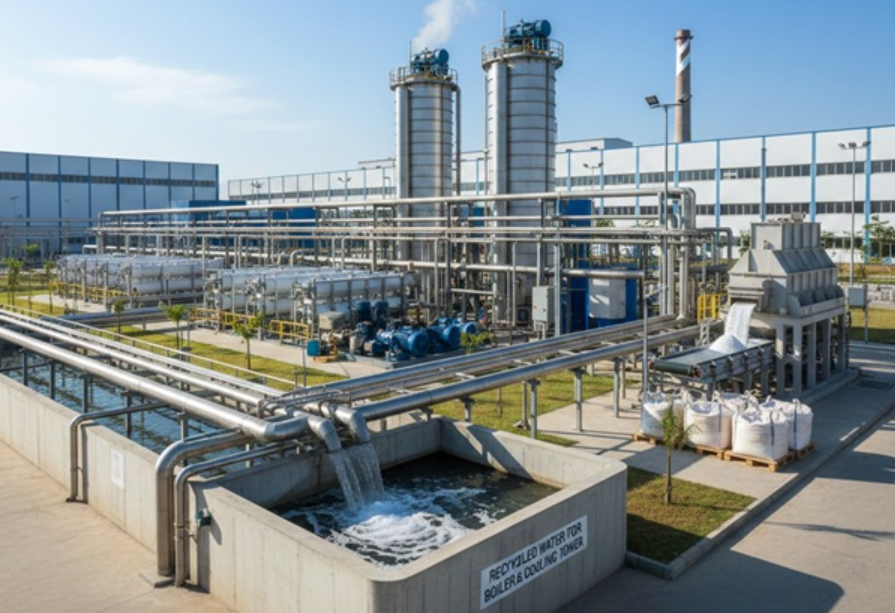
A successful zero liquid discharge plant is a symphony of high-end hardware and chemical engineering expertise. At Bisan Chemicals, we know that "off-the-shelf" products rarely work for complex Indian industrial effluents. Every component must be precisely selected based on your specific effluent chemistry.
The Essential Hardware:
- High-Pressure RO Membranes: Unlike standard RO, ZLD requires specialized membranes capable of handling high Total Dissolved Solids (TDS) without collapsing under pressure.
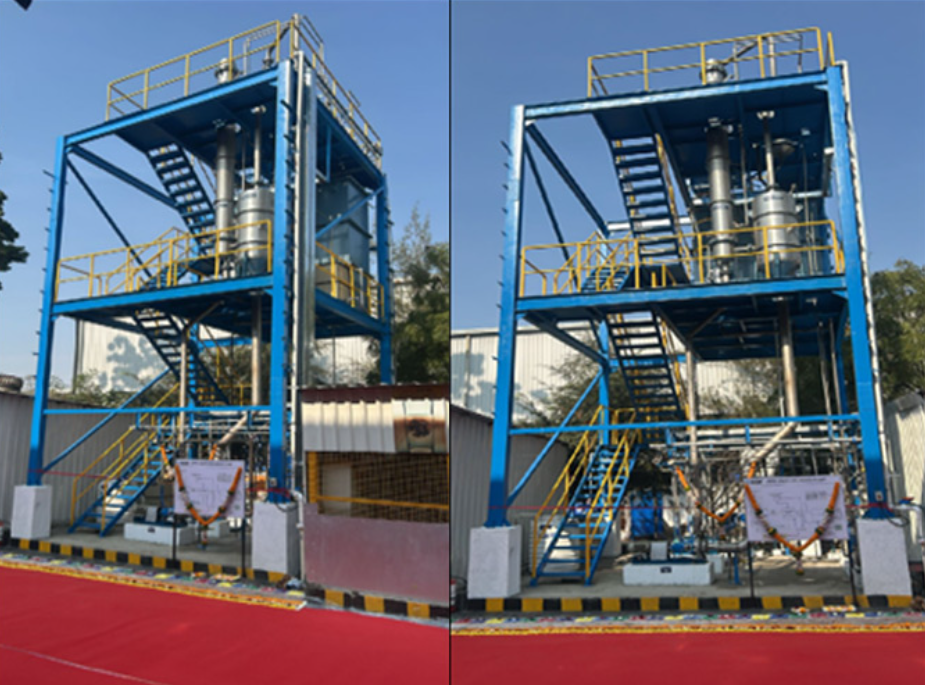
- Thermal Evaporators (The "Heart" of ZLD): These units handle the transition from liquid to solid. We specialize in MEE units for steam-rich plants and MVR units for plants looking for high electrical efficiency.
- Agitated Thin Film Dryers (ATFD): This is where the final moisture is removed. It ensures that your output is truly a solid, not a semi-liquid sludge that is difficult to handle.
- Chemical Dosing Systems: Precise dosing is required to prevent scale formation inside the tubes of your evaporators, ensuring the plant runs 24/7 without frequent cleaning stops.
Expert Pro-Tip: PCB Compliance Secret Many industries struggle with "OCEMS" (Online Continuous Effluent Monitoring Systems). By installing a ZLD plant, you essentially eliminate the need to monitor discharge quality—because there is no discharge. This moves your facility into the "Green Category," making license renewals (Consent to Operate) much faster and stress-free.
Why Your Facility Needs a ZLD System (The Benefits)
Investing in a zero liquid discharge system is no longer just about avoiding a fine; it is about building a resilient business model.
Challenges in Handling By-Products
- 100% Regulatory Compliance: Say goodbye to closure notices. With a ZLD system, you are fully compliant with CPCB and State PCB norms across India.
- Freshwater Independence: In cities like Mumbai, Pune, and Chennai, the cost of tanker water is rapidly increasing. A ZLD plant allows you to recover up to 95% of your process water, significantly reducing dependency on external water sources.
- Resource Recovery (Wealth from Waste): Depending on your industry, the salts recovered during crystallization—such as Sodium Sulfate or Sodium Chloride—can often be reused in your own process or sold to other industries.
- Global ESG Standards: If you export to European or American markets, your buyers evaluate your ESG (Environmental, Social, and Governance) performance. A ZLD plant is strong proof of your commitment to green manufacturing.
Industry-Specific Applications in India
At Bisan Chemicals, we have seen that every industry has a unique "water fingerprint." A one-size-fits-all approach is a recipe for failure.
- Pharmaceuticals: These plants deal with high COD (Chemical Oxygen Demand) and complex organic molecules. Our ZLD designs focus on breaking down these compounds during pre-treatment so the evaporators do not clog.
- Textiles & Leather: Known for high color and high salt content from dyeing processes. Our ZLD systems recover clear water that can be reused directly in the dye bath, saving both water and chemicals.
- Chemicals & Petrochemicals: These effluents are often aggressive and corrosive. We use specialized materials like Duplex Stainless Steel or Titanium in our evaporators to ensure a lifespan of 15+ years.
Cost Considerations: OPEX vs. Sustainability
We have to address the "elephant in the room": The operating cost (OPEX). Traditionally, ZLD was considered expensive because of the steam required for evaporation.
However, technology has changed. Bisans energy-efficient MVR technology has revolutionized the cost-benefit analysis. While a standard MEE unit uses fresh steam, an MVR unit uses a mechanical compressor to recycle its own vapor. This can reduce energy consumption by up to 60-70%. When you factor in the money saved on buying fresh water and the lack of discharge fines, most of our ZLD plants see a "Return on Investment" (ROI) within 24 to 36 months.
Conclusion: Partnering for a Water-Secure Future
The question is no longer "should we install a ZLD plant?" but rather "how soon can we start?" As India moves toward a circular economy, Zero Liquid Discharge is the only way for the manufacturing sector to grow without harming our precious water ecosystems.
At Bisan Chemicals & Engineers, we are more than just a manufacturer. Based in the industrial heart of Pune (PCMC), we are your thought partners. From initial site feasibility and chemical analysis to the final commissioning and Annual Maintenance (AMC), we provide end-to-end support for your water recovery journey.
Don't wait for a legal notice or a dry borewell to take action.
Would you like a custom feasibility report for your facility? Consult with Bisan Chemicals & Engineers today. Whether your plant is in Mumbai, Delhi, Ahmedabad, or Bangalore, our expert team is ready to design a ZLD solution that fits your budget and your goals.
Frequently Asked Questions (FAQs)
What is a Zero Liquid Discharge (ZLD) system?
Zero Liquid Discharge (ZLD) system is an advanced water treatment process designed to ensure that no industrial effluent is discharged into the environment. At Bisan Chemicals, our ZLD plants use a combination of membrane filtration (RO) and thermal evaporation (MEE/MVR) to recover up to 100% of wastewater, leaving behind only solid waste for safe disposal or reuse.
Is ZLD mandatory for industries in India?
Yes, for many sectors. The Central Pollution Control Board (CPCB) has mandated Zero Liquid Discharge for "highly polluting" industries, including textiles, tanneries, distilleries, and pharmaceuticals. Implementing a ZLD system is often a prerequisite for obtaining or renewing your Consent to Operate (CTO) from State Pollution Control Boards.
How much water can be recovered using a ZLD plant?
A well-engineered Zero Liquid Discharge plant can recover between 95% to 99% of process water. This recovered water is typically high-quality distilled water, which can be reused in boilers, cooling towers, or other industrial processes, significantly reducing your dependency on fresh water sources or tankers.
What is the difference between MEE and MVR in ZLD technology?
Both are evaporation technologies used in ZLD. Multi-Effect Evaporators (MEE) use multiple stages of steam to evaporate water. Mechanical Vapor Recompression (MVR) uses a centrifugal compressor to recycle and reuse the latent heat of the vapor. MVR is generally more energy-efficient and has lower operating costs, making it a preferred choice for long-term sustainability.
What are the main components of a Zero Liquid Discharge system?
A standard Zero Liquid Discharge flow diagram typically includes three main stages:
- Pre-treatment (to remove solids and organics).
- Reverse Osmosis (RO) (to concentrate the brine).
- Thermal Evaporation and Crystallization (to convert the remaining liquid into solid salts). Bisan Chemicals customizes these components based on your specific effluent chemistry.
What is the typical ROI for a ZLD plant?
While the initial investment in a Zero Liquid Discharge system is significant, the Return on Investment (ROI) is usually realized within 2 to 4 years. This is achieved through massive savings on freshwater procurement, elimination of effluent discharge costs, avoided legal penalties, and the potential recovery of valuable by-products from the solid waste.