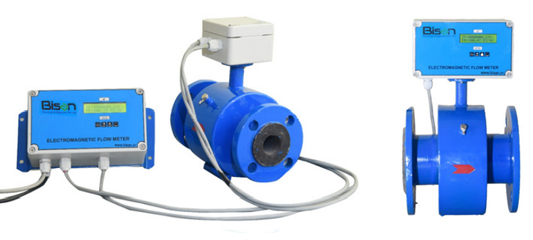
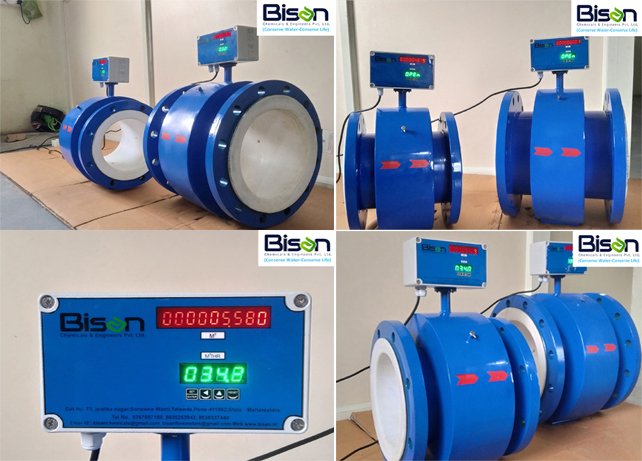
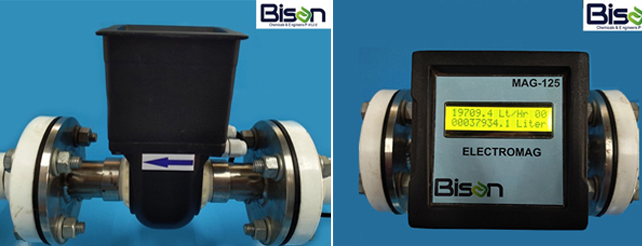
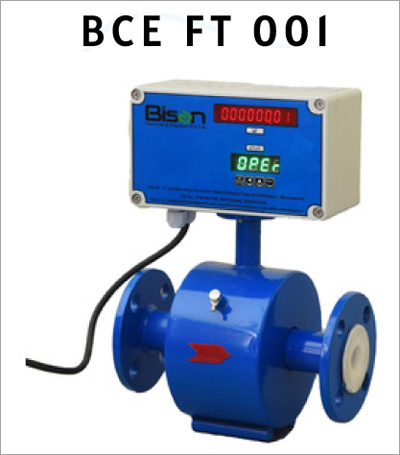
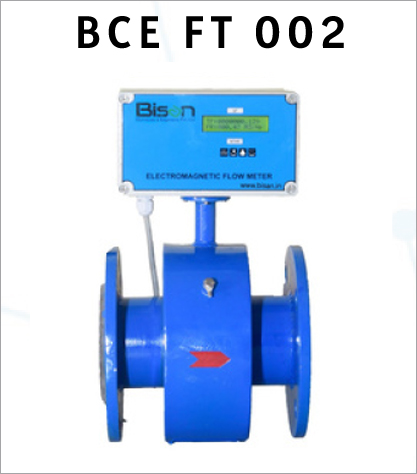
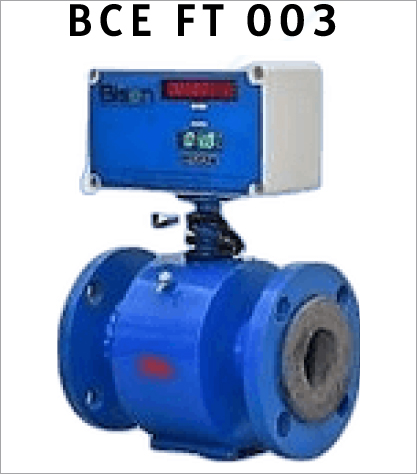
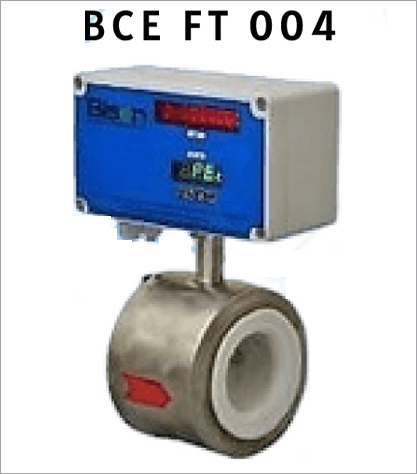
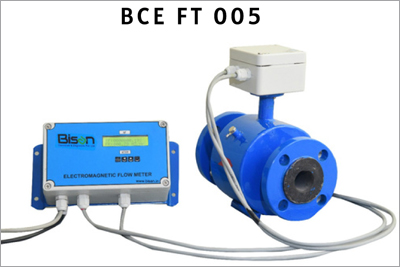
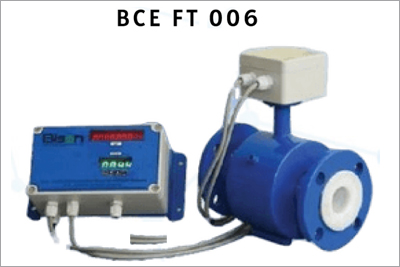
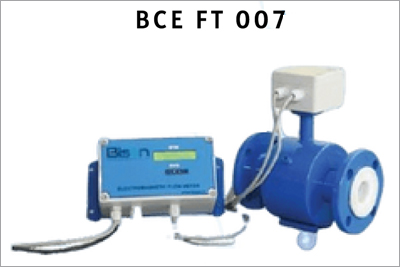
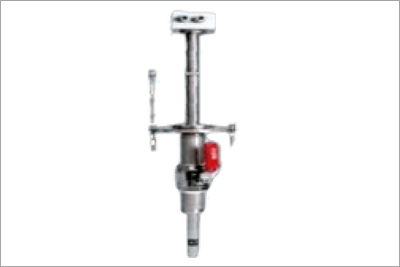
Electromagnetic Flow Meter (Insertion Type)
An Ideal solution for waterflow measurements in large
diameter pipes. Suitable for differentline sizes from 200 mm to 2000 mm.
Measurementresults are independent of density, viscosity, pressure, temperature,
solid impurities & conductivity variations(above 5y Siemens/cm)
Excellentlong-term stability using pulsed DC magnetization & auto-zero
technique. Lightin weight and easy to install. Accuracy is typically +1% ofthe
actual flow rate. Best suited forirrigation & water supply departments, public
services & utility departments.
Electromagnetic Flow Meter Working Principle (Explained Simply)
The electromagnetic flow meter operates on a straightforward yet elegant scientific principle
called Faraday's Law of Electromagnetic Induction. Imagine a conductor moving within a magnetic
field�that's essentially how the flow measurement works. When a conductive fluid flows through a
magnetic field created by coils around the pipe, it induces a voltage in the fluid. This voltage
is directly proportional to the flow velocity of the fluid.
In simple terms, the faster the liquid moves, the higher the voltage it generates. Inside the
flow meter, electrodes detect this voltage, and the device then converts this measurement into a
flow rate. This technology is incredibly accurate and reliable, making it perfect for measuring
the flow of liquids like effluents, slurries, and other conductive fluids. Essentially, it turns
invisible flow into a measurable electrical signal, giving you precise control over your
processes.
Technical Requirement for Electromagnetic Flow Meter
-
The liquid must be electrically conductive (typically above 5 �S/cm) for accurate
measurement.
-
The pipeline should remain completely full during operation to avoid reading errors.
-
Provide minimum straight lengths of 5D upstream and 3D downstream (D = pipe diameter) to
ensure stable flow.
-
Can be installed horizontally or vertically; vertical installation with upward flow is
recommended for best accuracy.
-
Ensure proper earthing and grounding to reduce electrical noise and improve signal
stability.
-
Use the correct power supply, generally 230 VAC or 24V DC, as per model requirements.
-
Output options such as 4�20mA, pulse, or RS-485 Modbus should be configured for SCADA or PLC
integration.
-
Choose lining materials like Teflon or rubber based on the type of fluid�clean water,
wastewater, slurries, or corrosive chemicals.
-
Select suitable electrode materials (SS316, Hastelloy, titanium) depending on chemical
compatibility.
-
Use an appropriate IP-rated enclosure for outdoor, humid, or harsh industrial environments.
Advantages of Electromagnetic Flow Meters
-
Electromagnetic flow meters offer high accuracy, no moving parts, and low maintenance,
making them reliable for long-term use.
-
They handle corrosive, slurry, and wastewater fluids easily, without pressure drop or flow
obstruction.
-
Performance remains stable regardless of temperature, density, or viscosity changes.
-
With options for SCADA/PLC connectivity and wide size availability, they are ideal for
industrial flow measurement across water, chemical, and process applications.
Applications of Electromagnetic Flow Meter
Electromagnetic flow meters are widely used for water and wastewater measurement, making them
ideal for Effluent Treatment Plant
(ETP), sewage treatment
plant, and municipal supply lines. They are also suited for industrial process
monitoring in steel, sugar, chemical, pharmaceutical, pulp & paper, and food industries.
These meters efficiently measure slurries, corrosive liquids, and conductive fluids, ensuring
accurate control in process water, irrigation lines, utilities, and effluent discharge systems.
FAQs for Electromagnetic Flow Meters
1. What is an Electromagnetic Flow Meter and how does it work?
An electromagnetic flow meter measures the flow of conductive liquids using Faraday’s Law
of Electromagnetic Induction. When fluid passes through a magnetic field inside the meter, it
generates a voltage proportional to the flow velocity. This voltage is sensed by electrodes and
converted into a highly accurate flow rate reading.
2. What liquids can be measured using an electromagnetic flow meter?
Electromagnetic flow meters can measure any electrically conductive liquid with conductivity
typically above 5 �S/cm. This includes wastewater, sewage, slurries, chemicals, effluents,
process water, and corrosive liquids. They are not suitable for non-conductive fluids like
hydrocarbons or demineralized water.
3. How accurate is an electromagnetic flow meter?
Electromagnetic flow meters are known for high accuracy, generally within �0.5% of reading. Their
performance remains consistent because flow measurement is unaffected by temperature, density,
pressure, or viscosity changes. This makes them ideal for industrial applications requiring
precise flow monitoring.
4. What installation requirements must be followed for electromagnetic flow
meters?
For accurate measurement, the pipeline must remain completely full, and straight pipe lengths of
5D upstream and 3D downstream should be maintained. Proper grounding, correct lining selection,
and ensuring the right power supply are essential to achieve stable and reliable readings.
5. Can electromagnetic flow meters be connected to SCADA or PLC systems?
Yes. Most electromagnetic flow meters come with output options such as 4�20mA, pulse output, or
RS-485 Modbus, making them fully compatible with SCADA and PLC automation systems. This allows
real-time monitoring, data logging, and advanced process control.
6. Where are electromagnetic flow meters commonly used?
Electromagnetic flow meters are widely used in water treatment plants, ETPs, STPs, chemical
industries, sugar plants, steel plants, pharma manufacturing, pulp and paper mills, and food
processing units. They are preferred for measuring wastewater, slurry, effluent discharge,
corrosive liquids, and other conductive fluids.