
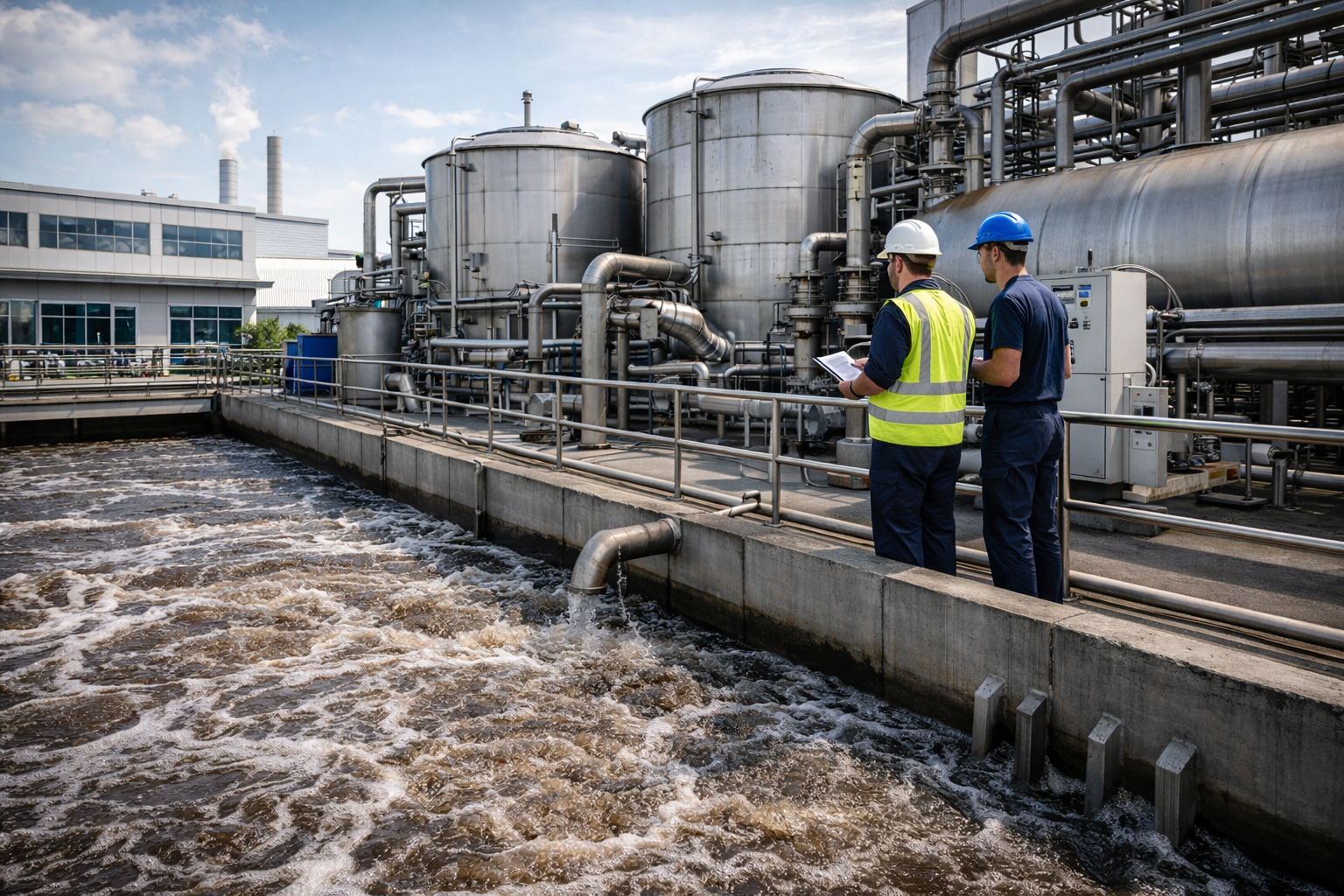
Pharmaceutical manufacturing companies often face a critical environmental challenge how to safely remove toxic metals from wastewater before discharge. During the production of medicines and active pharmaceutical ingredients, wastewater may contain contaminants such as lead, chromium, nickel, copper, and zinc. If these metals are not treated properly, they can pollute natural water bodies, harm aquatic life, and lead to regulatory penalties.
For industries, this makes heavy metal removal from wastewater an essential part of wastewater management. Effluent Treatment Plants (ETPs) are designed to remove harmful contaminants before wastewater is discharged or reused. However, the effectiveness of an ETP largely depends on the chemicals used during the treatment process. Selecting the right treatment chemicals ensures efficient removal of heavy metals while helping industries comply with environmental regulations.
This article explains the most effective chemicals used for heavy metal removal from pharmaceutical wastewater and how these chemicals help industries improve their wastewater treatment systems.
Understanding Pharmaceutical Wastewater
Pharmaceutical wastewater is often complex because it contains a combination of organic compounds, chemical residues, and heavy metals generated during drug manufacturing processes. These contaminants can vary depending on the type of medicines being produced and the chemicals used during synthesis.
Compared to typical industrial wastewater, pharmaceutical effluent may contain higher levels of toxic substances and fluctuating pH levels. This makes treatment more challenging and requires specialized chemical solutions.
Some common characteristics of pharmaceutical wastewater include :
- High concentration of organic pollutants
- Presence of toxic heavy metals
- High Chemical Oxygen Demand (COD)
- High Biological Oxygen Demand (BOD)
- Variable pH levels depending on the manufacturing process
Because of these factors, pharmaceutical industries rely on advanced wastewater treatment processes supported by specialized treatment chemicals.
Harmful Heavy Metals Found in Pharmaceutical Wastewater
Heavy metals are among the most harmful pollutants present in pharmaceutical wastewater. These metals do not degrade easily and can accumulate in the environment over time.
Some of the most common heavy metals found in pharmaceutical wastewater include :
- Lead (Pb) - Highly toxic and harmful to both aquatic organisms and human health
- Chromium (Cr) - Often found in industrial processes and chemical reactions
- Nickel (Ni) - May enter wastewater through catalysts used in manufacturing
- Copper (Cu) - Can appear due to corrosion of pipes or chemical reactions
- Zinc (Zn) - May be present due to additives or metal equipment corrosion
- Cadmium (Cd) - A toxic metal sometimes found in industrial waste streams
If these metals are discharged without proper treatment, they can contaminate water bodies, soil, and groundwater. This can create long-term environmental damage and serious health risks.
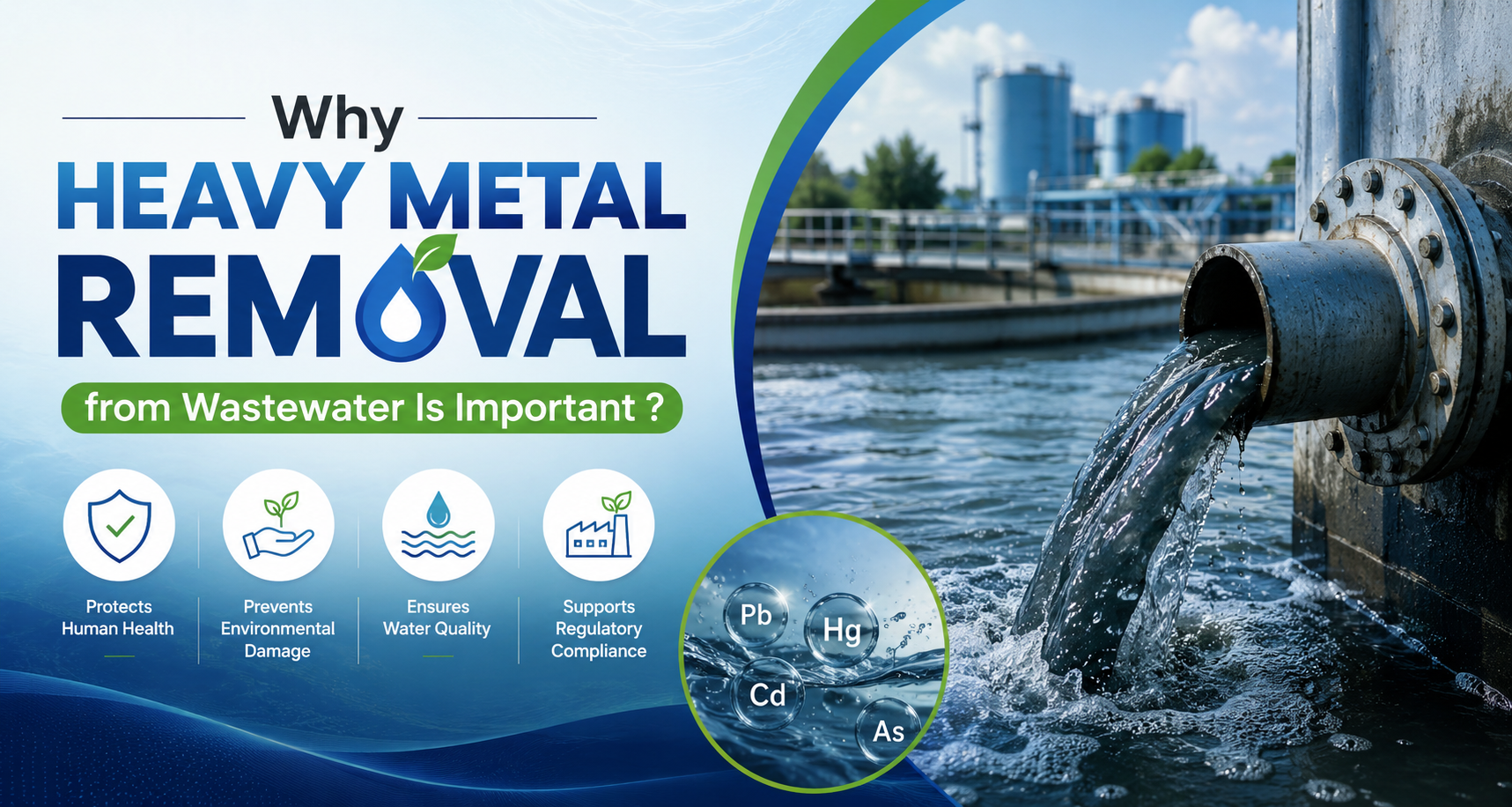
Why Heavy Metal Removal from Wastewater Is Important ?
Removing heavy metals from industrial wastewater is not only an environmental responsibility but also a legal requirement for many industries.
Heavy metal removal is important for several reasons :
- Protects aquatic ecosystems from toxic contamination
- Prevents soil and groundwater pollution
- Helps industries meet CPCB and SPCB discharge standards
- Reduces environmental liability and regulatory penalties
- Protects public health and surrounding communities
Because of these risks, pharmaceutical industries must implement reliable wastewater treatment solutions to remove heavy metals before discharge.
Methods for Removing Heavy Metals from Wastewater
There are several treatment methods used to remove heavy metals from wastewater. The selection of the method depends on factors such as wastewater composition, metal concentration, and treatment plant design.
Chemical Precipitation
Chemical precipitation is one of the most widely used methods in industrial wastewater treatment. In this process, chemicals react with dissolved metal ions and convert them into solid particles that can be separated from the water.
This method is widely preferred because it :
- Works effectively for large wastewater volumes
- Is cost-effective for industrial applications
- Can remove multiple metals at the same time
Adsorption
Adsorption is another treatment method where metal ions attach to the surface of adsorbent materials such as activated carbon. This method is often used as a polishing step after primary chemical treatment.
Low-Cost Adsorbents
Researchers have also explored the use of low-cost materials for heavy metal removal. These materials may include natural substances or industrial by-products that can bind metal ions.
While promising, many of these materials are still under development and may not always be suitable for large-scale industrial wastewater treatment.
Nanotechnology-Based Treatment
Advanced technologies such as nanoparticle-based treatment systems are also being studied. Nanomaterials can capture metal ions efficiently due to their high surface area. However, these technologies are still emerging and are not widely used in conventional industrial wastewater treatment plants.
Most Effective Chemicals for Removing Heavy Metals
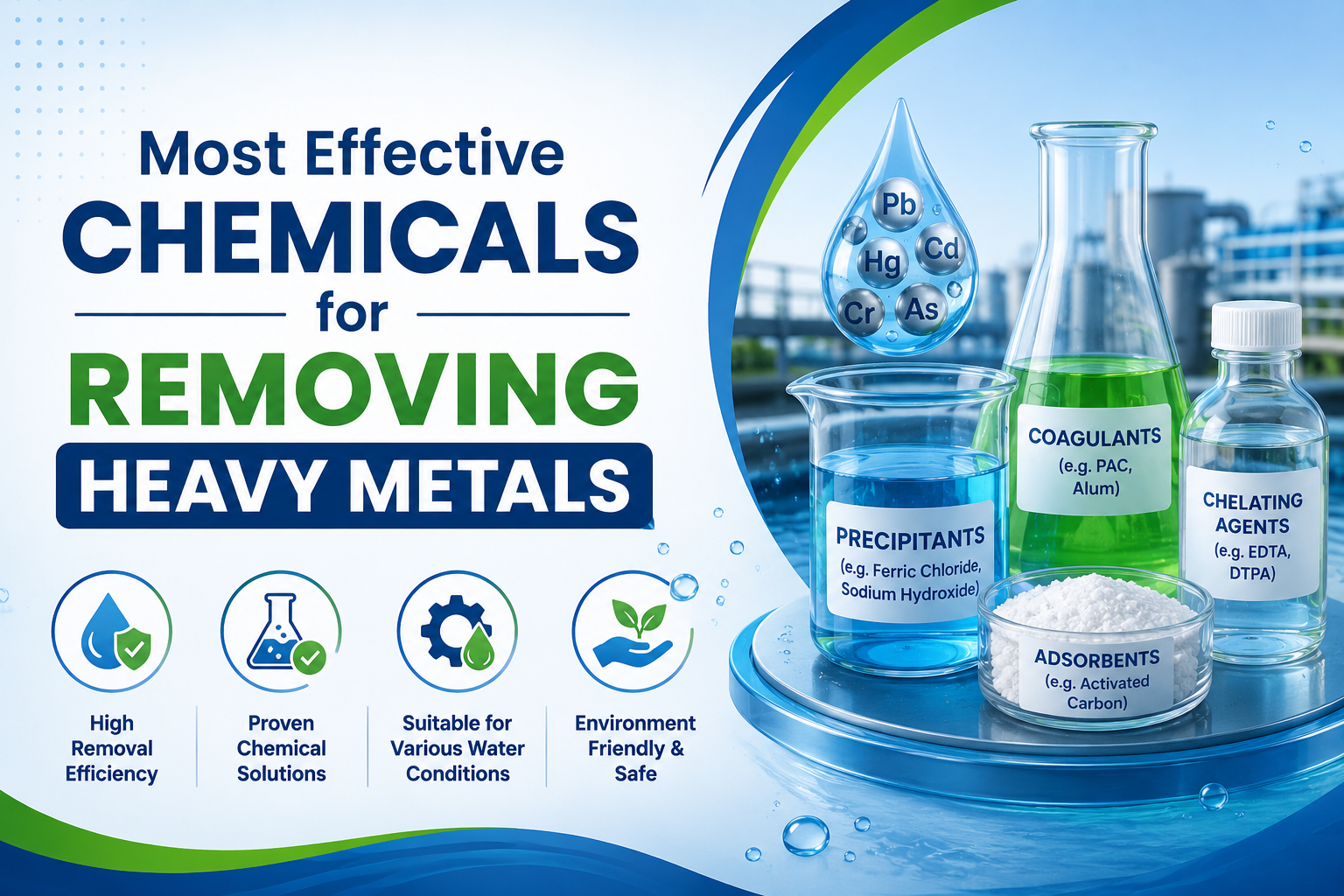
Chemical treatment remains one of the most reliable solutions for heavy metal removal from wastewater. Several types of chemicals are commonly used in Effluent Treatment Plants to support this process.
Coagulants
Coagulants are chemicals that help destabilize suspended particles and dissolved metals present in wastewater. By neutralizing the electrical charges of these particles, coagulants allow them to combine and form larger particles that can settle out of the water.
Chemicals Used for Heavy Metal Removal in Wastewater Treatment
Common coagulants used in wastewater treatment include:
- Ferric chloride
- Aluminum sulfate
- Polyaluminium chloride (PAC)
These chemicals play an important role in the early stages of wastewater treatment.
Flocculants (Polyelectrolytes)
Flocculants help bind small particles together to form larger clusters called flocs. These flocs settle quickly during sedimentation, making it easier to remove contaminants from wastewater.
Benefits of flocculants include:
- Faster settling of particles
- Improved sludge separation
- Higher treatment efficiency
Flocculants are often used together with coagulants to improve overall wastewater treatment performance.
pH Adjustment Chemicals
The pH level of wastewater plays a critical role in heavy metal removal. Many metals precipitate more effectively under specific pH conditions.
Common chemicals used for pH adjustment include:
- Lime
- Sodium hydroxide
- Sulfuric acid
Maintaining the correct pH allows dissolved metal ions to convert into solid particles that can be removed through sedimentation and filtration.
Chemical Precipitation Agents
Precipitation agents react with metal ions to form insoluble compounds. These compounds settle in treatment tanks and are removed as sludge.
This process is widely used because it is effective for removing dissolved metals from industrial wastewater.
Chemical Treatment Process in Effluent Treatment Plants
Effluent Treatment Plants typically follow a structured treatment process to remove heavy metals and other contaminants.
The basic treatment process includes:
- pH adjustment to create suitable conditions for chemical reactions
- Coagulation to destabilize contaminants
- Flocculation to form larger particles
- Sedimentation to remove settled flocs
- Filtration to remove remaining suspended solids
- Sludge handling for safe disposal of metal-containing sludge
Each stage of this process helps improve wastewater quality and ensures compliance with environmental discharge standards.
How Bisan's Effluent Treatment Chemicals Help Remove Heavy Metals ?
Effective heavy metal removal from wastewater requires reliable chemicals that perform consistently under industrial conditions. Bisan Chemicals provides a specialized range of Effluent Treatment Chemicals designed to improve the efficiency of wastewater treatment plants.
Bisan's treatment chemicals help industries remove contaminants and optimize their ETP operations.
Key solutions offered include:
- Coagulants that destabilize suspended particles and dissolved metals
- Flocculants that form strong flocs for faster sedimentation
- pH adjustment chemicals that support metal precipitation
- COD and color removal chemicals for improved wastewater quality
These chemical solutions help industries achieve better treatment efficiency while meeting regulatory discharge standards.
Based in PCMC, Pune, Bisan supplies effluent treatment chemicals to industries across India. The company focuses on providing reliable and environmentally responsible solutions that support sustainable wastewater management.
Conclusion
Pharmaceutical wastewater often contains toxic heavy metals that must be removed before discharge. Without proper treatment, these contaminants can cause environmental damage and regulatory violations.
Among the different treatment methods available, chemical treatment using coagulants, flocculants, precipitation agents, and pH adjustment chemicals remains one of the most effective approaches for heavy metal removal from wastewater.
By selecting the right treatment chemicals and optimizing wastewater treatment processes, pharmaceutical industries can significantly improve the performance of their Effluent Treatment Plants while ensuring safe and sustainable wastewater management.